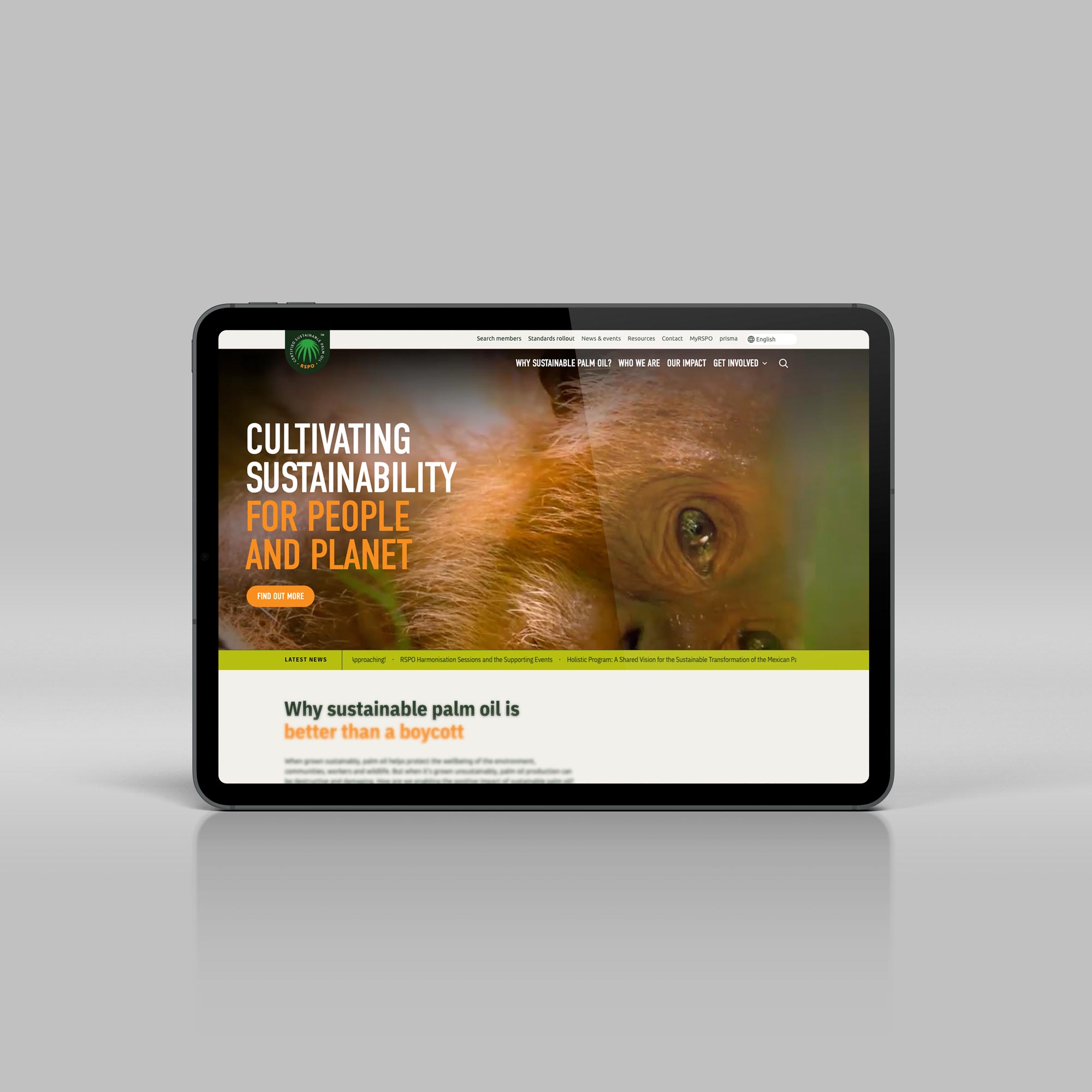
Making sustainable palm oil the norm
A story with two sides.
Palm oil is the world’s most popular vegetable oil. Widely used in cooking, it’s also in everything from cakes to conditioner, as it’s clear, odourless and binds brilliantly. Plus oil palms grow far better than alternative oil crops like soy, so farmers of all sizes love them. This popularity gives palm oil a problem. Growers clear forests to produce the crop, which destroys wildlife, damages communities and releases carbon dioxide. What’s more, some palm oil producers neglect and exploit workers.
Importantly, there is a second side to the story. When palm oil is grown sustainably – not involving deforestation and protecting workers’ and growers’ rights – the product can be a force for good. Sustainable palm oil contributes to global food security. Equally, sustainable production techniques support communities and safeguard the environment and endangered species. It’s a complex, nuanced story. One that the Roundtable on Sustainable Palm Oil (RSPO) – the global regulatory body for the sector – recognises isn’t widely understood yet.
Setting out the facts.
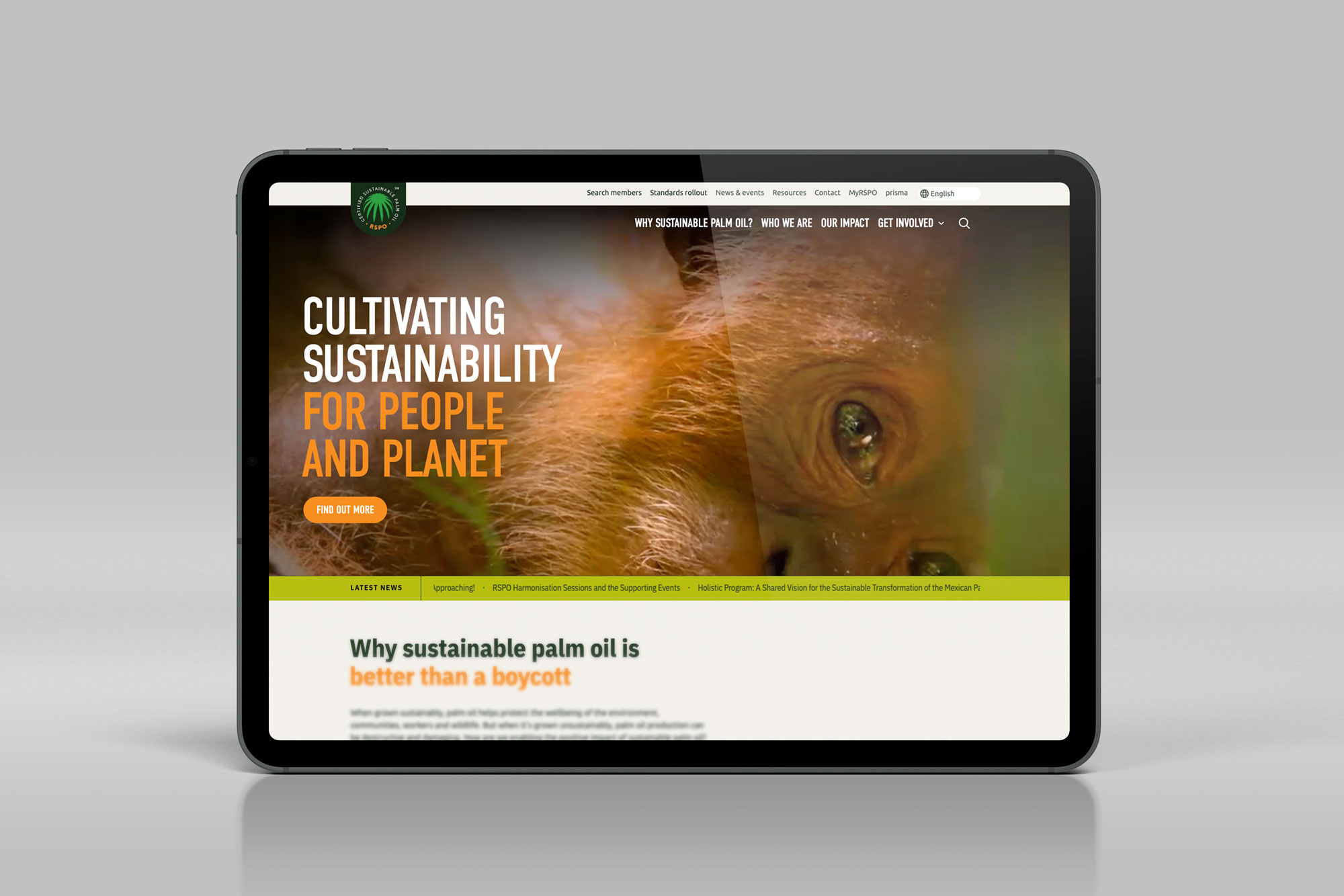
Along with web agency Line Industries, I was asked by the RSPO to address this poor awareness. More specifically, we were briefed to launch their new global site, giving a transparent, balanced account of sustainable palm oil.
One of RSPO’s key challenges was that perceptions of palm oil vary widely across the world. In the developed West, the negative impact of unsustainable palm oil is well-known. But the crop’s reputation is more positive in developing countries such as Indonesia, which employs over a million people in related industries. Addressing these differing perspectives in the story of sustainable palm oil was one of RSPO’s top priorities when it set out to recreate www.rspo.org.
A new chapter.
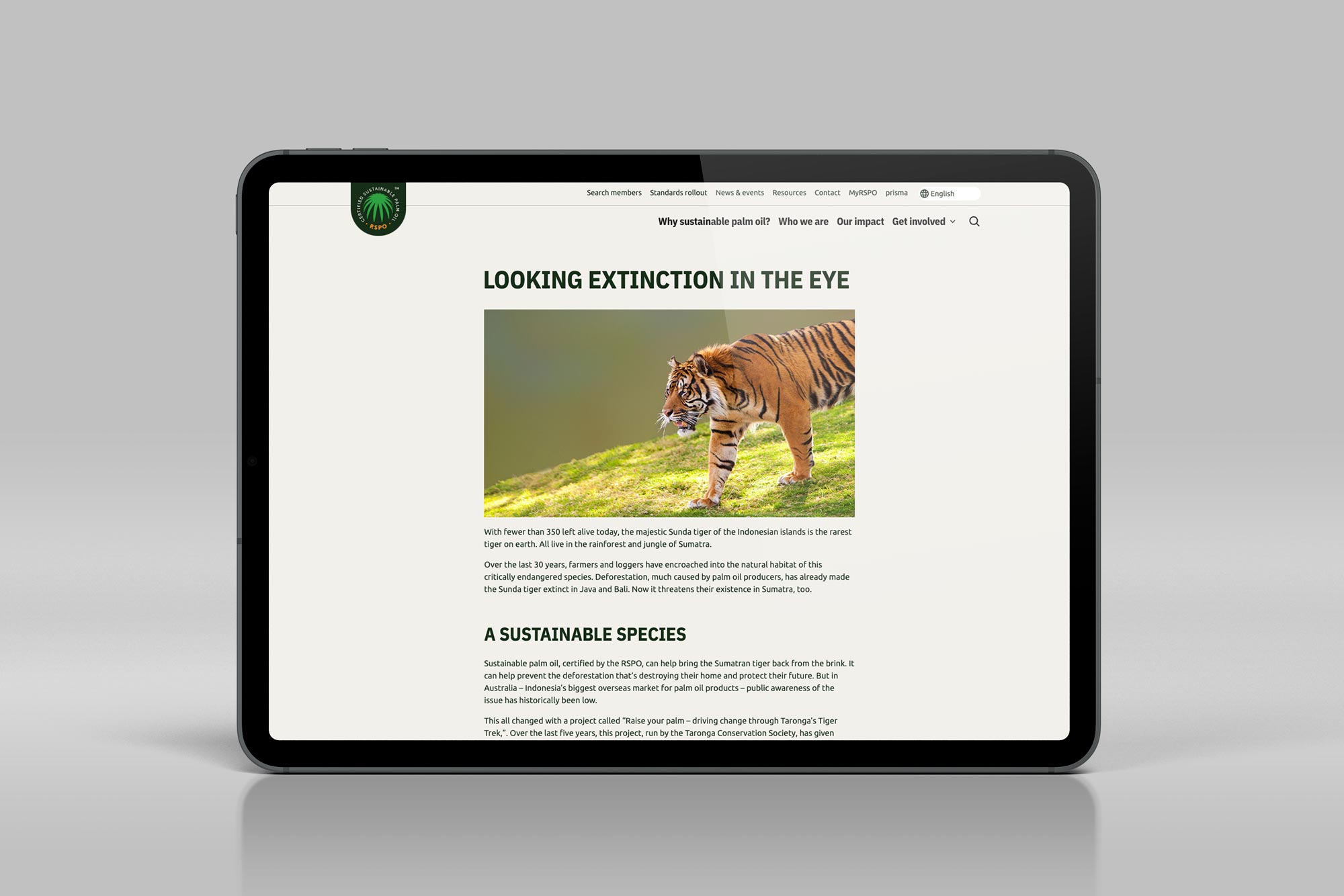
Line and I addressed RSPO’s challenges head on. On the new site, we acknowledged one answer to palm oil’s challenges is a boycott. However, we made the case for governing the sector effectively, and making all palm oil sustainable. Throughout we were conscious of avoiding greenwashing. We made sure the negative impacts of unsustainable palm oil weren’t undercooked. Rather we balanced the option of a boycott against the environmental and economic benefits of sustainable palm oil.
As well as simplifying the copy’s tone and making it more straightforward, we introduced facts to illustrate the size of the problem and its solution. These stripped the emotion out of the issues and helped with signposting. Time-pressed users were able to navigate the site more easily by jumping between the beats of the story. Finally, we let the positive impact of sustainable palm oil speak for itself. We told the human stories of smallholders, wildlife sanctuaries and producers who had embraced sustainability. Showing how their decisions improved the planet, their prosperity and their people’s lives was the most compelling argument of all for making all palm oil sustainable.